Free Topical Sermons: There are different ways to present God’s word to God’s people. The topical sermon is one way to share God’s word with God’s people.
In this article, I will look at what is a topical sermon, how to write a topical sermon, some examples of topical sermons and links to more resource material for topical sermons.

1. What is a Topical Sermons?
A topical sermon is a sermon developed from a bibical principle or truth.
A biblical principle or truth could relate to God’s love, God’s grace, God’s forgiveness or God’s salvation.
A topical sermon develops a topic from a biblical truth or principle by looking at it from a certain perspective or angle.
For example, you may want to look at the Depth of God’s Love or you may want to look at How To Receive God’s Grace or you may want to look at The Nature of God’s Forgiveness or you may want to look at God’s Plan For Salvation.
In Philippians 2:1-4, you will find the biblical principle of unity. In this passage of Scripture, the apostle Paul encourages the Christians at Philippi to dwell together in harmony.
You now have a topic you can preach. Dwelling Together In Harmony!
The apostle Paul informs the Christians at Philippi HOW they can dwell together in harmony. The HOW question gives you three sub-points. (1) Having a unity of focus, (2) having a unity of thought, and (3) having a unity of purpose.
You now have a preaching topic with three sub-points. Your sub-points flow from your preaching topic and expand and explain your preaching topic.
Your topical sermon now looks like this. There are three principles to help Christians dwell together in harmony. They are…
- Having a unity of focus (2:1)
- Having a unity of thought (2:2)
- Having a unity of purpose (2:3-4)
2. How to Write a Topical Sermon?
In the topical sermon above, you have a preaching topic with three sub-points.
You have linked the preaching topic with the three sub-points by using the HINGE word principles. The hinge word must be a plural noun this noun swings the three sub-points from your preaching point.
Next you draw out any incidental points that flow from, explain or expand the three sub-points.
Your topical sermon may now look like this…
There are three principles to help Christians dwell together in harmony. They are:
1. Having a unity of focus (2:1) Four focal points:
- Encouragement in Christ
- Comfort in God’s love
- Fellowship in the Spirit
- Compassion and mercy in Christianity
2. Having a unity of thought (2:2) Three standards of thought:
- Having the same mind
- Having the same love
- Having the same goal
3. Having a unity of purpose (2:3-4) Two statements:
- Looking beyond ourselves
- Looking to encourage others
Your sermon now has a preaching topic, sub-points, and incidental points. You preach your topic by expanding and explaining your sub-points and incidental points.
To finish your topical sermon, you will need to add content to your sermon outline, you will need to write an introduction and a conclusion.
When it comes to writing topical sermons, you simple need to develop a topic from a biblical principle or truth by looking at it from a certain perspective or angle. Once you do this, you will be able to write topical sermons with ease.

3. Examples of Free Topical Sermons
A. Example #1
The first example of a topical sermon outline touches on the spiritual battles that we face each day as a christian. This topical sermon outline comes from several biblical texts.
There are three insights into winning the spiritual battles in our lives. They involve:
1. Realizing that we have three enemies
- The devil (1 Peter 5:8)
- The world (1 John 2:15-17)
- The Flesh or the sin nature (1 Peter 2:11)
2. Realizing that we have two battle fronts
- Personal holiness (1 Peter 1:13-16)
- Personal witness (Matthew 28:19-20)
3. Realizing that we have two weapons
- The Armor of God (Ephesians 6:11, 13)
- The Word of God (Ephesians 6:17)
You can check out this topical sermon by clicking the following link – Spiritual Warfare Sermon!
B. Example #2
The second example of a topical sermon outline touches on how to resist deadly temptation. The topical sermon outline comes from James 1:13-18.
There are three truths that help us to resist deadly temptation. They involve:
1. Knowing the source of temptation (1:13-14)
- The source of temptation is not God (1:13)
- The source of temptation lies within man himself (1:14)
2. Recognizing the steps in temptation (1:14-15)
- It begins with entertaining temptation (1:14)
- It continues with desire to sin (1:15a)
- It concludes with detrimental consequences (1:15b)
3. Understanding the solution to temptation (1:16-18)
- Understanding the deception (1:16)
- Understanding the character of God (1:17)
- Understanding the gift of God (1:18)
You can check out this topical sermon by clicking the following link – Resisting Deadly Temptation
4. Related Book Resources
The Importance For Application
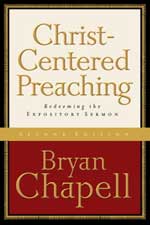
QUOTE by Bryan Chapell: People have the right to ask, “Why did you tell me that? What am I supposed to do with that information? All right, I understand what you think – so what?” The healthiest preaching does not assume listerers will automatically see how to apply God’s truths to their lives; it supplies the application people need.
If even the preacher cannot tell (or has not bothered to determine) how the sermon’s truths relate to life, then people not only are unlikely to make the connection, but also will wonder why they bothered to listen (Christ-Centered Preaching by Bryan Chapell [Amazon Books]).
The Importance of Structure
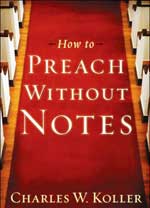
QUOTE by Charles W. Koller: Preaching without notes is largely a matter of structure … without sound structure, a real message may prove obscure and impotent.
Sound structure will add immeasurably to the power of a sermon and good homiletical habits are a priceless resource to the pulpiteer … an outline that stands out clear and sharp is the first long step to freedom in the pulpit (How To Preach Without Notes by Charles W. Koller [Amazon Books]).
The Importance of the Conclusion
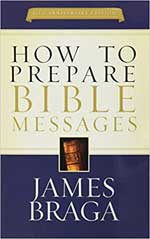
QUOTE by James Braga: The conclusion is undoubtedly the most potent element in the entire sermon. If it is poorly executed, it may weaken or even destroy the effect of the preceding parts of the discourse. But some preachers forget the importance of the conclusion with the result that their sermons, which otherwise are carefully and thoroughly prepared, fail at the crucial point.
Instead of concentrating their material into a burning and powerful focus, they allow the current of thought to be dissipated by commonplace or feeble remarks at the close (How To Prepare Bible Messages by James Braga [Amazon Books]).